
For people living with depression, anxiety, or PTSD that has not improved enough with standard treatments, ketamine therapy may be another option to discuss with a healthcare professional.
For patients in the Rio Grande Valley, understanding how treatment works, who may be a candidate, what happens during a session, and how follow-up care is handled can make the process feel much easier to understand.
This ketamine therapy overview explains the basics in clear terms, including how ketamine may affect the brain, who may be considered for treatment, what patients can expect before and after a session, and how physician-supervised care can help support a safe treatment experience.
At RGV Direct Care Family Clinic, Dr. Fausto M. Escobedo and his team help eligible adults explore ketamine therapy for treatment-resistant depression, anxiety, and PTSD in Weslaco and nearby Rio Grande Valley communities, including McAllen, Edinburg, and Harlingen.
This information is for general educational purposes and does not replace personalized medical advice.
What Is Ketamine Therapy?

Ketamine therapy uses medically supervised doses of ketamine as part of a treatment plan for certain mental health conditions.
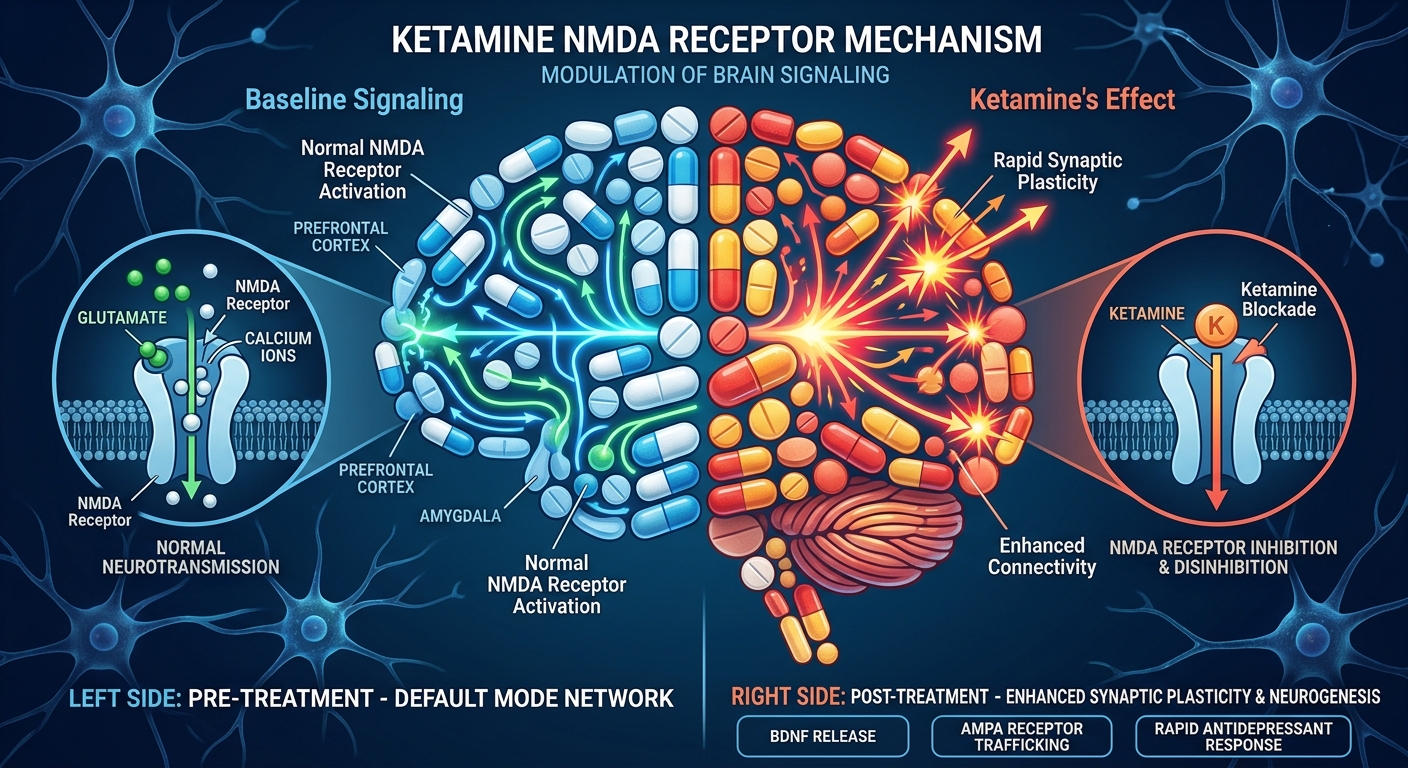
Unlike many traditional antidepressants that primarily affect serotonin or norepinephrine, ketamine mainly influences the brain’s glutamate system, including receptors involved in communication between brain cells.
Researchers believe these effects may also support processes related to neuroplasticity, or the brain’s ability to adapt and strengthen neural connections.
For some people with treatment-resistant depression, this different mechanism may help explain why improvement can happen more quickly than with traditional medications.
Ketamine has also been studied for anxiety and PTSD, and RGV Direct Care Family Clinic provides treatment for eligible adults with treatment-resistant depression, anxiety, and PTSD.
What Conditions May Be Treated With Ketamine?
Ketamine has been studied most extensively for treatment-resistant depression, but research has also explored its use for anxiety and PTSD.
At RGV Direct Care Family Clinic, ketamine therapy may be considered for eligible adults with:
- Treatment-resistant depression
- Treatment-resistant anxiety
- Treatment-resistant PTSD
Treatment decisions are individualized. A medical evaluation helps the care team understand the patient’s symptoms, previous treatments, current medications, and overall health before recommending care.
Who May Be a Candidate for Ketamine Therapy?
Ketamine therapy may be considered for adults whose symptoms continue to affect daily life despite medications, therapy, or other standard treatments.
A potential candidate may:
- Have treatment-resistant depression, anxiety, or PTSD
- Have tried medications, psychotherapy, or other treatments without enough improvement
- Be medically stable enough for outpatient treatment
- Be able to follow preparation and aftercare instructions
- Have transportation available after treatment
- Be willing to participate in follow-up care
Before treatment, the healthcare team reviews the patient’s medical history, current medications, previous treatment responses, physical health, and mental health history.
The goal of the evaluation is to understand whether ketamine may fit the patient’s individual needs and treatment goals.
What to Expect Before, During, and After Ketamine Therapy

Understanding the treatment process can make a first appointment feel less overwhelming. Although each patient’s treatment plan may be different, ketamine therapy usually involves preparation, monitored treatment, and a recovery period.
Before Treatment
Before a ketamine session, the care team reviews preparation instructions with the patient.
These may include guidance about eating, drinking, medications, transportation, and any recent changes in health.
Patients can also use this time to ask questions about what the treatment may feel like, how long the appointment may take, and what happens afterward.
During Treatment
Ketamine is administered according to the patient’s individual treatment plan.
During the session, patients remain in a clinical setting while trained staff monitor their comfort, vital signs, and response to treatment.
Some people may temporarily experience relaxation, lightheadedness, dizziness, changes in perception, or a feeling of detachment from their surroundings. The care team remains available throughout the session to provide support and monitor how the patient is responding.
After Treatment
Patients remain at the clinic for observation after treatment until the care team determines they are ready to leave.
Because ketamine may temporarily affect alertness, coordination, or perception, patients should follow the clinic’s transportation and aftercare instructions and should not drive until they have been cleared to do so.
Follow-up visits can help the care team understand how symptoms are changing and whether the treatment plan should continue or be adjusted.
Potential Benefits of Ketamine Therapy
One reason ketamine has received attention in mental health care is the possibility of a faster response for some patients.
Traditional antidepressants may take several weeks to reach their full effect. Some people with treatment-resistant depression may notice improvement within hours or days, while others may respond more gradually over several sessions.
Possible improvements may include:
- Reduced feelings of hopelessness
- Fewer persistent negative thoughts
- Better emotional regulation
- Improved ability to participate in daily activities
- Greater engagement with work, relationships, or other parts of life
Ketamine may be used as one part of a broader treatment plan that can also include psychotherapy, psychiatric care, healthy routines, and other appropriate support.
Why Physician Supervision Matters

Ketamine affects both the brain and the body, which is why medical evaluation and monitoring are important parts of treatment.
At RGV Direct Care Family Clinic, ketamine therapy is provided under the supervision of Dr. Fausto M. Escobedo, who is board-certified in Family Medicine and is a member of ASKP3, the American Society of Ketamine Physicians, Psychotherapists, and Practitioners.
Dr. Escobedo’s clinical oversight helps ensure that patients receive individualized evaluation, appropriate monitoring, and care based on their specific medical and mental health needs.
For people who have struggled to find enough relief from traditional treatments, RGV Direct Care can help them explore whether physician-supervised ketamine therapy may be another option.
How Many Ketamine Treatments Are Needed?
There is no single treatment schedule that is right for every patient.
The number and frequency of sessions may depend on the patient’s symptoms, health history, previous treatments, and how they respond to ketamine.
Some patients may begin with a series of sessions followed by reassessment. Follow-up care allows the clinical team to monitor progress and adjust treatment based on each patient’s response.
The goal is not to follow a fixed number of sessions, but to create a treatment plan that reflects the patient’s individual needs.
Choosing a Ketamine Therapy Clinic in the Rio Grande Valley

Choosing a ketamine clinic involves more than simply finding the closest location.
Patients may want to consider whether the clinic provides:
- Medical screening before treatment
- Physician involvement and oversight
- Monitoring during ketamine administration
- Clear preparation and recovery instructions
- Follow-up and aftercare guidance
- A treatment plan based on individual needs
- Clear communication about what patients can expect
At RGV Direct Care Family Clinic, eligible adults with treatment-resistant depression, anxiety, and PTSD can receive physician-supervised evaluation and care in Weslaco.
For patients in McAllen, Edinburg, Harlingen, and surrounding Rio Grande Valley communities, having treatment available closer to home can also make appointments, transportation, and follow-up care easier to manage.
Conclusion

Ketamine therapy can feel unfamiliar at first, but knowing what to expect can make the process easier to understand. From the initial evaluation to monitored treatment and follow-up care, each step is designed around the patient’s health history, symptoms, and individual treatment goals.
At RGV Direct Care Family Clinic, eligible adults with treatment-resistant depression, anxiety, and PTSD can receive physician-supervised ketamine care in Weslaco and nearby Rio Grande Valley communities.
Patients in Weslaco, McAllen, Edinburg, Harlingen, and surrounding areas can learn more about the clinic’s approach, treatment process, and what to expect before deciding whether ketamine therapy may be right for them.
Ready to explore your options? Learn more about ketamine therapy at RGV Direct Care Family Clinic and see what physician-supervised treatment involves.
What Is Ketamine Therapy?
Ketamine therapy uses medically supervised doses of ketamine as part of a treatment plan for certain mental health conditions. It affects glutamate-related signaling differently from many traditional antidepressants.
What Conditions Does RGV Direct Care Treat With Ketamine?
RGV Direct Care Family Clinic provides physician-supervised ketamine treatment for eligible adults with treatment-resistant depression, anxiety, and PTSD.
How Quickly May Ketamine Help?
Some patients with treatment-resistant depression may notice improvement within hours or days, while others may respond more gradually. The timing and degree of improvement vary from person to person.
What Happens During a Ketamine Session?
Patients receive treatment in a clinical setting while the care team monitors their comfort, vital signs, and overall response. Temporary sensations such as relaxation, dizziness, or changes in perception may occur.
How Many Ketamine Sessions Are Needed?
The number of sessions depends on the patient’s symptoms, treatment history, response to therapy, and clinician’s recommendations. Treatment plans are individualized rather than based on one fixed schedule.
Who Oversees Ketamine Treatment at RGV Direct Care Family Clinic?
Treatment is overseen by Dr. Fausto M. Escobedo, who is board-certified in Family Medicine and is a member of ASKP3, the American Society of Ketamine Physicians, Psychotherapists, and Practitioners.
How Do I Know if Ketamine May Be Right for Me?
A medical evaluation can help determine whether ketamine may be appropriate based on your symptoms, previous treatments, medications, health history, and treatment goals.