If you’ve spent years trying antidepressants, therapy, or other treatments without much relief, you’ve probably started looking at options that once felt out of reach. Ketamine therapy is one of them. And the first question most people ask is a fair one: Is ketamine therapy safe?
The short answer is that ketamine therapy can be safely administered when it is delivered by a physician in a clinical setting with proper screening and monitoring. But that answer only applies when those safeguards are actually in place. This guide explains what helps make ketamine therapy safe, who it may be appropriate for, and what the treatment process generally looks like when it is done responsibly.
This information is for general educational purposes only and does not replace personalized medical advice; always talk with a licensed healthcare professional about your specific situation.
How Ketamine Works in the Brain
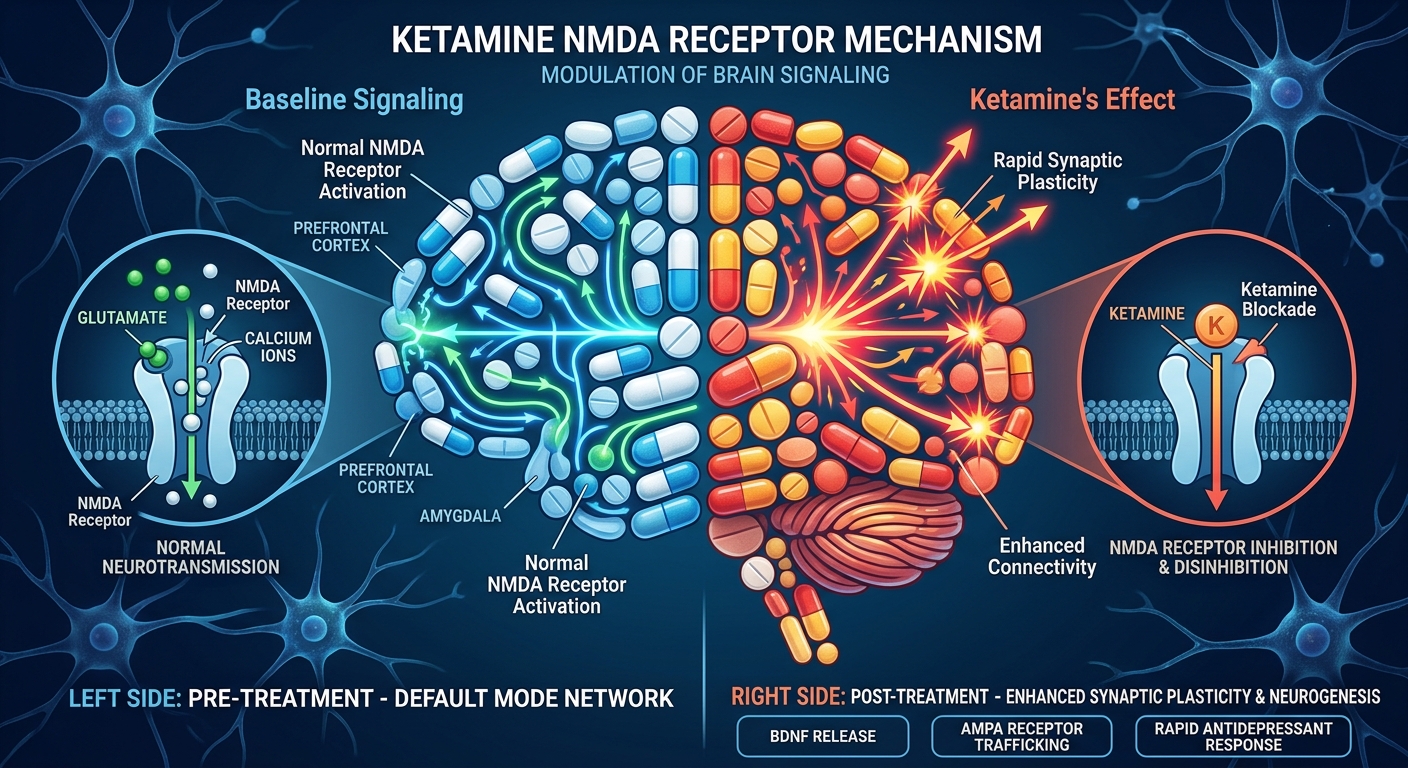
Ketamine acts on a brain receptor called NMDA, which plays a role in mood regulation and neural flexibility. Unlike many traditional antidepressants that target serotonin or dopamine systems and may take weeks to build effect, ketamine may work more quickly, sometimes within hours or days of treatment.
That speed is one reason it has received clinical attention for treatment-resistant depression, anxiety, and PTSD. It is also why the experience during a ketamine session can feel different from treatments many patients have tried before.
For mental health conditions, ketamine is used off-label. Ketamine is FDA‑approved as an anesthetic. Its use for depression, anxiety, and PTSD is considered off‑label, meaning it is based on physician judgment and available research rather than specific FDA approval for these conditions.
Who Tends to Be a Good Candidate?

Not everyone is a good fit for ketamine therapy, and that is intentional. Responsible programs begin with a thorough intake process that includes a psychiatric evaluation, a complete review of the medical history, and a direct conversation with the supervising physician.
Adults who may be considered for treatment often meet criteria such as:
- A confirmed diagnosis of major depressive disorder, anxiety, or PTSD
- Inadequate relief from standard treatments
- General medical stability
- No acute psychiatric crisis
Certain conditions may disqualify patients, including:
- Uncontrolled high blood pressure
- Serious cardiovascular disease
- Active psychosis
- Active mania
- Current substance use disorder
- Pregnancy
The screening process is not a formality. It is one of the most important safety layers in any well-run ketamine program.
What Happens During a Session?
In a clinical setting, sessions are conducted in private, monitored rooms. Patients receive ketamine either intravenously (IV) or intramuscularly (IM) while resting comfortably. The environment is usually calm, quiet, and designed to reduce anxiety.
A session typically lasts around 40 to 60 minutes. A physician or a trained clinical team member monitors the patient throughout, tracking vital signs and observing the patient’s response.
Patients may experience temporary dissociative effects during treatment, such as altered perception, mild visual changes, or a floating sensation. These effects are expected, temporary, and generally resolve after the session ends.
Patients should not drive themselves home. A driver is required for each appointment, and same-day driving is not permitted. Alcohol and recreational substances should be avoided for at least 24 hours afterward.
Safety Screening, Monitoring, and Integration With Your Current Care
Safety starts before the first dose. A full medical evaluation reviews your history, current medications, cardiovascular health, and mental health diagnoses. During the session itself, vital signs are continuously monitored by trained clinical staff under the supervision of Dr. Fausto M. Escobedo. Dr. Escobedo is Board Certified in Family Medicine and a member of the American Society of Ketamine Physicians, Psychotherapists, and Practitioners.
Why Physician Supervision Is So Important
This is where safety either holds or breaks down. Ketamine administered in a medical office under direct physician supervision is very different from ketamine used outside a clinical environment.
In a well-structured program, the physician is involved in the evaluation, treatment planning, and ongoing monitoring, not just the medication administration. Vital signs are tracked during sessions, and any concerning response can be addressed in real time by qualified staff. Ketamine is a Schedule III controlled substance and has recognized potential for misuse and psychological dependence. Receiving it in a monitored medical setting with clear treatment limits and follow‑up is one way to help reduce those risks.
Note that for a number of patients, blood pressure tends to increase; therefore, it is important to monitor it.
Patients considering treatment should ask direct questions:
- Who supervises care?
- What monitoring happens during sessions?
- How are complications handled if they arise?
- What support is available after treatment?
Those answers can tell you a lot about the quality of a program.
Ketamine as Part of a Broader Care Plan

Ketamine therapy often works best when it is not offered in isolation. Many clinical programs pair treatment with counseling or psychiatric follow-up as part of a coordinated care plan.
Some patients report that the period after a ketamine session, when the brain may be more receptive to change, is when therapy feels especially productive. Building that support into the treatment plan from the beginning is often a practical approach.
Results vary. Some patients notice improvement after one or two sessions. Others may complete a longer series before feeling a shift. Some may not respond. No specific outcome is guaranteed, which is why realistic expectations are important.
Is Ketamine Therapy Safe for Treatment-Resistant Patients?
Patients who have not responded to two or more adequate treatment attempts are often described as treatment-resistant. This group is frequently the one that begins exploring ketamine therapy. For them, the risk-benefit discussion can look different than it does for someone early in treatment.
When standard options have not worked, the risks of leaving severe depression, anxiety, or PTSD untreated are real. Ketamine therapy, when administered correctly, may offer some patients another path forward.
Even then, the safety framework does not change. Thorough screening, physician oversight, and consistent monitoring remain essential for every patient.
What to Look for Before Starting Treatment
If you are seriously considering ketamine therapy, take time to evaluate the program before committing. Look for physician-led care, not physician-adjacent care. Ask how adverse responses are managed. Learn what follow-up looks like after the treatment series ends. Make sure the intake process feels thorough enough to prioritize your safety rather than simply moving you through enrollment.
So, is ketamine therapy safe? Under the right conditions, with qualified physician oversight, proper screening, and appropriate monitoring, evidence suggests it can be. Whether it may be right for you depends on your personal medical and psychiatric history. For more background reading, you can also browse additional patient resources or review common questions about ketamine therapy.
About RGV Direct Care
RGV Direct Care offers physician-supervised ketamine therapy for adults in the Rio Grande Valley, serving patients from McAllen, Edinburg, Harlingen, and the broader South Texas region. Dr. Fausto M. Escobedo leads patient evaluations and oversees care throughout treatment.
If you have been living with treatment-resistant depression, anxiety, or PTSD and want to explore whether ketamine therapy may be appropriate for you, RGV Direct Care offers consultations to review your history and answer your questions with no pressure and no obligation.
Ketamine is a prescription medication and a Schedule III controlled substance, which means it has recognized medical uses but also carries a potential for misuse and psychological dependence. When used for mental health conditions, ketamine is given at lower, carefully controlled doses in a monitored medical setting, with your vital signs and overall response checked throughout treatment. Possible side effects can include brief increases in blood pressure and heart rate, dissociation or feeling “detached,” dizziness, nausea, and fatigue; these effects are usually temporary and are discussed with you before you begin. With repeated or long‑term use, some patients may also be at risk for bladder or urinary symptoms, which is one reason treatment plans are individualized and closely supervised by a physician. Ketamine therapy is not right for everyone, and a thorough evaluation of your medical and psychiatric history helps determine whether the potential benefits outweigh the risks in your specific situation.

Is ketamine therapy safe for people with anxiety?
Ketamine therapy may be appropriate for adults with treatment-resistant anxiety, but candidacy depends on a full medical and psychiatric evaluation. Patients with active cardiovascular issues, psychosis, or substance use disorders may not be good candidates.
How long does a ketamine therapy session take?
Sessions typically last around 40 to 60 minutes. The number of sessions in a treatment plan varies by patient. A driver is required for every appointment, and same-day driving is not allowed.
Is ketamine FDA-approved for depression?
IV and IM ketamine are not FDA-approved for depression, anxiety, or PTSD. They are used off-label for these conditions. Patients should understand that distinction before starting treatment.
What are the main risks of ketamine therapy?
Possible side effects during treatment can include dissociation, elevated blood pressure, dizziness, and nausea. These effects are usually temporary and managed within the clinical setting.
Does insurance cover ketamine therapy?
Coverage varies and is often limited because ketamine is used off-label for many mental health conditions. Contact your insurance provider or the clinic directly for the most accurate information.