
Choosing a ketamine doctor Rio Grande Valley patients can trust can feel overwhelming, especially after medications or counseling haven’t provided enough relief. The right local provider should offer more than ketamine: patients need careful screening, physician oversight, continuous monitoring, and a plan that supports ongoing mental health care.
Dr. Fausto M. Escobedo provides medical evaluation and oversight for eligible adults considering ketamine therapy in Weslaco and surrounding Rio Grande Valley communities, including McAllen, Edinburg, and Harlingen.
This information is for general educational purposes only and does not replace personalized medical advice: always talk with a licensed healthcare professional about your specific situation.
How Ketamine Therapy May Help When Standard Treatments Fall Short
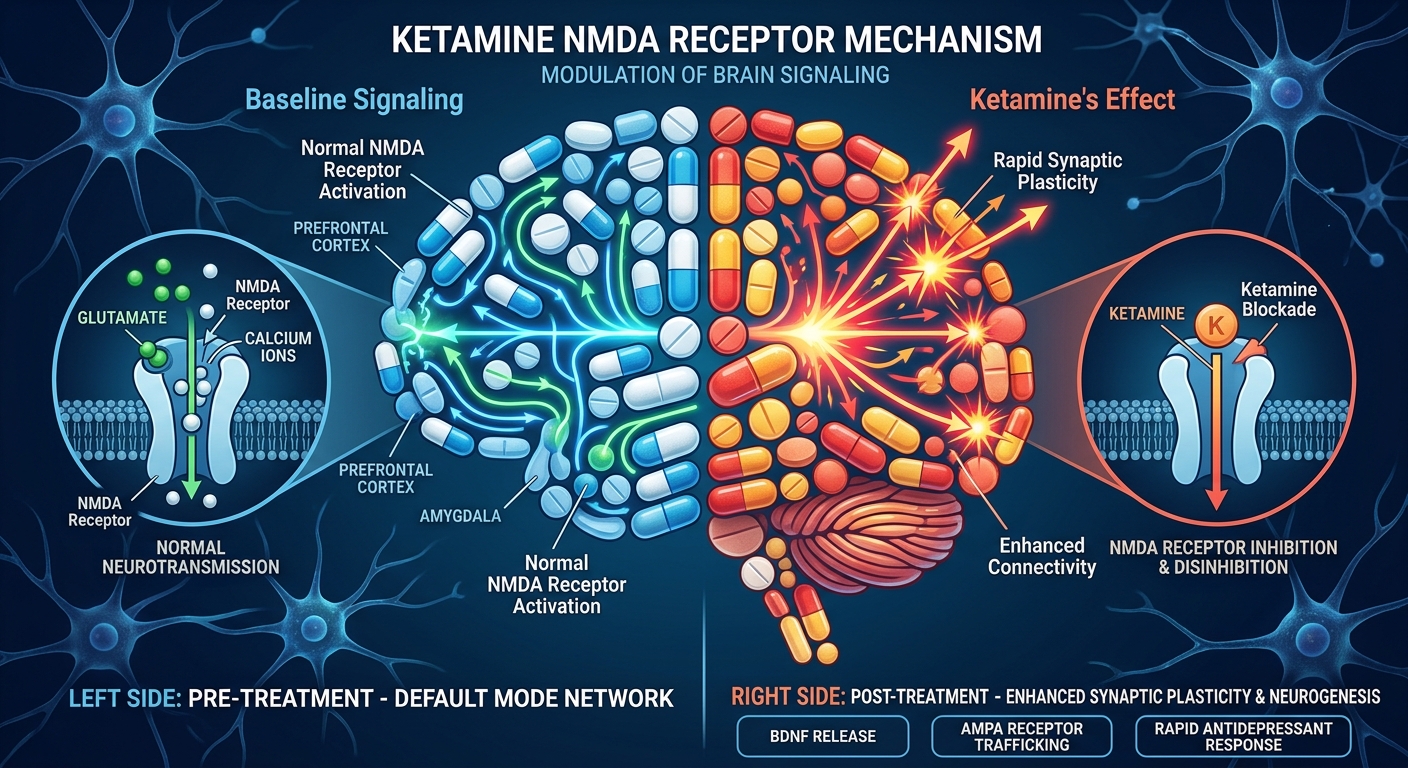
Ketamine therapy may be an option for adults whose depression hasn’t improved enough with antidepressants or talk therapy. It works differently from traditional medications, and researchers are studying how ketamine’s effects on glutamate signaling and synaptic plasticity may relate to changes in mood and cognition.
Some people notice a difference within hours or days, while others may not respond. Results, treatment schedules, and the need for follow-up care vary from person to person. A trustworthy local ketamine provider will be honest about these possibilities and won’t present ketamine as a quick fix.
It is important to know that ketamine is FDA-approved as an anesthetic. Its use for depression, anxiety, and PTSD is considered off-label, meaning it is based on physician judgment and available research rather than specific FDA approval for these conditions.
Who May Be a Candidate for Ketamine Therapy in the Rio Grande Valley?
A possible candidate is generally an adult with treatment-resistant depression who is medically stable and hasn’t received sufficient relief from appropriate standard care. Eligibility cannot be determined from symptoms, or an online search for a ketamine doctor Rio Grande Valley, alone. It requires an individual medical and psychiatric evaluation.
A consultation is also a chance to discuss practical responsibilities. Patients must be able to follow preparation and aftercare instructions, arrange transportation, and participate in recommended follow-up care. Evaluation doesn’t obligate patients to begin treatment.

Medical and Mental Health Factors Reviewed During Screening
Screening should identify risks before the first dose. A qualified ketamine provider should review current and previous diagnoses, treatment response, medications, allergies, cardiovascular health, blood pressure, substance use, and relevant psychiatric symptoms.
Factors requiring additional caution, or potentially making treatment inappropriate, may include:
- Uncontrolled hypertension or serious cardiovascular disease
- Active psychosis or unstable psychiatric symptoms
- Active or poorly managed substance misuse
- Pregnancy
- Medication interactions or conditions that increase sedation risk
- Inability to follow transportation and post-treatment restrictions
These factors don’t replace physician judgment. Records from a psychiatrist, therapist, cardiologist, or primary care provider may be requested when they help clarify safety. Patients searching for a ketamine doctor Rio Grande Valley should favor a clinic willing to pause, obtain records, or recommend another option when the risks outweigh the potential benefits.
What to Expect Before, During, and After a Ketamine Treatment
A safe session starts with preparation and ends with supervised recovery, not simply medication administration. Before treatment, the clinic provides instructions about food, drinks, medications, transportation, and what to wear or bring. Patients shouldn’t change prescribed medications unless their clinician specifically instructs them to do so.
During treatment at RGV Direct Care Family Clinic, trained clinical staff monitor vital signs and the patient’s overall response under the supervision of Dr. Fausto M. Escobedo. Dr. Escobedo is Board Certified in Family Medicine and a member of the American Society of Ketamine Physicians, Psychotherapists, and Practitioners. The controlled clinical setting allows the team to respond to blood pressure changes, nausea, dizziness, anxiety, or dissociation, the temporary sensation of feeling detached from oneself or one’s surroundings.
Afterward, the patient remains for observation until clinically ready to leave with a responsible adult. Patients should not drive, operate machinery, ride a bicycle, or take part in hazardous activities for 24 hours after receiving ketamine.
How to Compare Ketamine Doctors
Look for a provider who takes time to understand your needs, explains what to expect, stays involved throughout treatment, and offers support afterward. A ketamine doctor in the Rio Grande Valley should make you feel informed, comfortable, and cared for.
Ask about their experience, safety practices, treatment approach, and follow-up care. It’s also helpful to understand what the cost covers and whether insurance or self-pay options are available.
The FDA has warned that compounded ketamine products used for psychiatric conditions are not FDA-approved and may carry serious risks, including sedation, dissociation, elevated blood pressure, respiratory depression, misuse, dependence, and urinary or bladder problems. Patients should ask how a clinic screens, monitors, and follows patients during treatment. Its concerns include sedation, dissociation, elevated blood pressure, respiratory depression, misuse, dependence, and urinary or bladder problems.
Ketamine is a prescription medication and a Schedule III controlled substance, which means it has recognized medical uses but also carries a potential for misuse and psychological dependence. When used for mental health conditions, ketamine is given at lower, carefully controlled doses in a monitored medical setting, with your vital signs and overall response checked throughout treatment. Possible side effects can include brief increases in blood pressure and heart rate, dissociation or feeling “detached,” dizziness, nausea, and fatigue: these effects are usually temporary and are discussed with you before you begin. With repeated or long-term use, some patients may also be at risk for bladder or urinary symptoms, which is one reason treatment plans are individualized and closely supervised by a physician. Ketamine therapy is not right for everyone, and a thorough evaluation of your medical and psychiatric history helps determine whether the potential benefits outweigh the risks in your specific situation.
Contact the clinic if symptoms after treatment are serious, unusual, or do not improve. Call 911 or go to the nearest emergency department if there is immediate danger. Ketamine treatment does not replace crisis care. Anyone experiencing suicidal thoughts or emotional distress can call or text 988 through the 988 Suicide & Crisis Lifeline. Call 911 if there is an immediate risk of harm.
Conclusion: Making an Informed Decision About Local Ketamine Care

Finding the right ketamine doctor Rio Grande Valley residents can trust starts with choosing someone who listens, prioritizes your well-being, and gives you honest answers about what treatment can and can’t do. If you live in Weslaco, McAllen, Edinburg, Harlingen, or a nearby South Texas community, you can schedule a private, no-pressure conversation with RGV Direct Care Family Clinic. Share your concerns, talk about treatments you’ve tried, and ask questions about possible benefits, risks, and costs. There’s no obligation, just a caring team ready to help you understand your options.
Ketamine Therapy FAQs in the Rio Grande Valley
What makes ketamine therapy a potential treatment option in the Rio Grande Valley?
Ketamine therapy may be an option for adults with treatment-resistant depression who have found little relief from standard treatments. A physician administers low-dose ketamine in a controlled setting to support possible mood improvement.
Who may be a candidate for ketamine therapy near me in the Rio Grande Valley?
Candidates may include medically stable adults whose depression has not improved with medication or psychotherapy. A qualified clinician must complete a medical and psychiatric evaluation to determine eligibility.
How may a ketamine doctor safely administer ketamine therapy in the Rio Grande Valley?
Clinics such as RGV Direct Care Family Clinic may provide physician-supervised treatment with individualized dosing and vital-sign monitoring. Observation during and after treatment helps manage side effects such as nausea, dissociation, or temporary blood pressure changes.
What might I expect during a ketamine therapy consultation in the Rio Grande Valley?
A ketamine doctor will review your health history, symptoms, previous treatments, and potential risk factors. You can also discuss treatment options, safety, expected outcomes, and costs without any obligation to begin therapy.
How quickly might ketamine therapy affect depression symptoms?
Some patients report symptom relief within hours or days, but results vary. The number of sessions required and the duration of benefits depend on the individual.
Is ketamine therapy safe and legal to use for depression in the Rio Grande Valley?
Ketamine is FDA-approved as an anesthetic. When a licensed clinician determines it is medically appropriate, ketamine may be prescribed off-label for depression; it is not FDA-approved specifically for that use. Appropriate screening, informed consent, monitoring, and follow-up are important because treatment carries risks and is not suitable for every patient.