
When depression, anxiety, or PTSD does not improve with standard treatments, the experience can feel frustrating and exhausting. A ketamine clinic near McAllen, TX may provide another medically supervised option. It is important to know that ketamine is FDA‑approved as an anesthetic. Its use for depression, anxiety, and PTSD is considered off‑label, meaning it is based on physician judgment and available research rather than specific FDA approval for these conditions.
RGV Direct Care offers ketamine therapy for adults in Weslaco, McAllen, Mission, Edinburg, Pharr, and nearby Hidalgo County communities, helping patients access care without routinely traveling outside the Rio Grande Valley.
Ketamine is not a quick fix or suitable for everyone. A responsible clinic provides compassionate, individualized evaluation without promising results. Treatment should include careful safety monitoring and ongoing assessment of changes in symptoms, well-being, and daily life.
Disclaimer
This information is for general educational purposes only and does not replace personalized medical advice. Always talk with a licensed healthcare professional about your specific situation.
When Ketamine Therapy May Be Considered
A physician may evaluate ketamine therapy for adults with severe, treatment-resistant depression symptoms that have not improved with standard care. It may also be considered on an individual basis for certain severe anxiety or PTSD symptoms, though clinical evidence for these conditions is still evolving.

Ketamine is generally considered as part of a broader care plan, not a replacement for psychotherapy, psychiatric care, or prescribed medication. Eligibility depends on an individualized evaluation of the potential benefits, risks, treatment history, and available evidence.
Anyone considering ketamine therapy in the Rio Grande Valley should consult a qualified physician. Symptoms alone do not determine eligibility.
How Ketamine May Affect Mental Health Symptoms
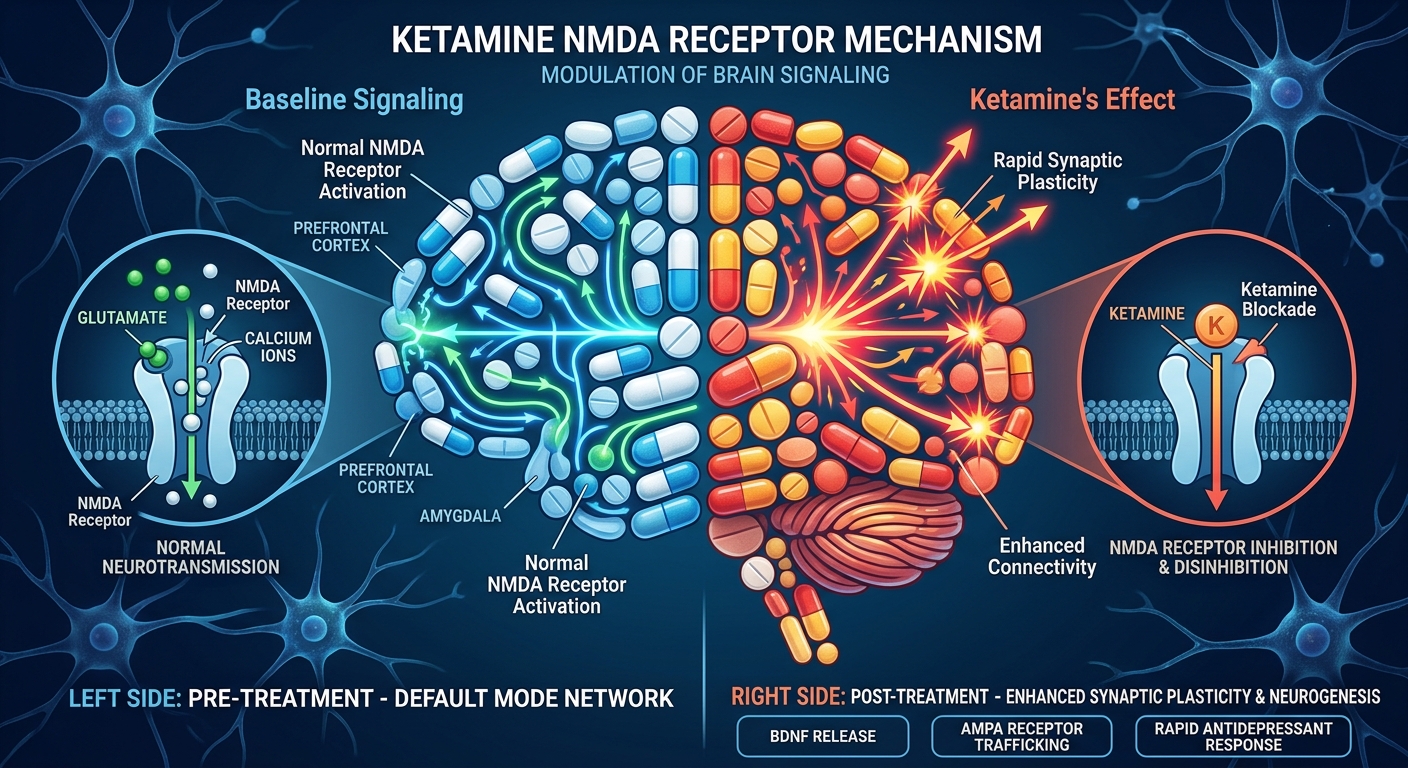
In clinical and laboratory research, ketamine has been observed to interact with glutamate pathways, differing from the mechanisms of traditional antidepressants. While researchers continue to study how these interactions correlate with symptom relief, individual patient responses vary, and early changes in mood do not occur for everyone.
While traditional antidepressants typically require several weeks to demonstrate efficacy, some clinical observations note that ketamine can interact with different neural pathways, which may result in an earlier onset of response for certain individuals. However, these initial effects vary significantly and may not be sustained.
Research reviewed by the National Institute of Mental Health supports ketamine’s potential for treatment-resistant depression, while evidence for anxiety disorders and PTSD remains preliminary. Patients can explore the clinic’s ketamine treatment options before discussing routes, doses, and schedules with a physician.
Who May Be Considered for Ketamine Therapy
Potential candidates are generally medically stable adults with persistent symptoms despite reasonable trials of standard care. Physicians consider more than a diagnosis when determining eligibility.
Factors may include:
- Age and symptom severity
- Previous treatments and responses
- Current medications
- Physical and cardiovascular health
- Psychiatric history
- Substance-use history
- Support available at home
- Ability to follow preparation and recovery instructions
- Access to a responsible adult for transportation
Ketamine may be inappropriate or require additional evaluation for people with uncontrolled high blood pressure, serious cardiovascular conditions, active psychosis, unstable bipolar symptoms, pregnancy, or active substance misuse. Medication interactions and previous reactions to anesthesia must also be reviewed.
A consultation is the only reliable way to determine candidacy. RGV Direct Care Family Clinic uses a physician-led care model under the supervision of Dr. Fausto M. Escobedo.
Dr. Escobedo is board-certified by the American Board of Family Medicine and maintains professional membership in the American Society of Ketamine Physicians, Psychotherapists, and Practitioners to support an integrative approach to patient care. Patients can learn more about the clinic’s approach.

What to Expect at a Ketamine Clinic
Treatment typically begins with a medical consultation to determine whether ketamine therapy may be appropriate for your needs. The care team will explain how to prepare, what you may experience, potential risks and side effects, transportation requirements, and when to contact the clinic.
Ketamine may be administered in different ways depending on the treatment plan and provider. Sessions generally take place in a quiet, controlled clinical setting under professional supervision. Some patients experience altered perception, lightheadedness, detachment, or a changed sense of time. Trained staff monitor your response throughout treatment.
After the session, you will remain under observation until you are cleared to leave. Clinics generally require a responsible adult to drive you home. You should follow all post-treatment instructions, which may include avoiding driving, operating machinery, drinking alcohol, or making significant decisions for the rest of the day.
Screening, Monitoring, and Possible Side Effects
Safety starts before the first dose. A full medical evaluation reviews your history, current medications, cardiovascular health, and mental health diagnoses. During the session, trained clinical staff continuously monitor vital signs under the supervision of Dr. Fausto M. Escobedo.
Possible temporary side effects may include:
- Increased blood pressure or heart rate
- Dizziness or lightheadedness
- Nausea
- Fatigue
- Blurred vision
- Anxiety
- Dissociation or a sense of detachment
These effects often ease during the observation period, although individual experiences vary. Seek urgent medical attention for chest pain, severe breathing difficulty, persistent vomiting, significant confusion, or thoughts of self-harm. Patients may also review this overview of ketamine therapy safety.
Treatment Schedules and Follow-Up Care
Ketamine treatment frequency depends on your response, tolerance, goals, and physician assessment. Progress may be tracked through questionnaires, patient reports, daily functioning, and follow-up visits.
Limited improvement or side effects may require dose changes, a pause, or discontinuation. Maintenance treatment is based on individual response. Ketamine may complement psychotherapy, medication management, and primary care. Do not change prescribed medications without consulting your clinician.
How You’ll Know If Ketamine Therapy Is Working
Changes associated with ketamine therapy may be gradual and may appear in your symptoms, sleep, relationships, routines, or ability to manage daily activities. Tracking these changes helps your physician evaluate treatment accurately.
Clinicians may compare symptom questionnaires before and after treatment while monitoring whether you:
- Sleep more consistently
- Experience fewer intrusive thoughts
- Return to work or daily responsibilities
- Reconnect with family and friends
- Participate more fully in psychotherapy
Mood improvement is not always the first sign of progress. Follow-up visits at a ketamine clinic near McAllen, TX, help determine whether to adjust the dose, space out sessions, begin maintenance treatment, pause therapy, or stop treatment if side effects outweigh the benefits.
Choosing a Ketamine Clinic Near McAllen, TX
When evaluating a ketamine clinic near McAllen, TX, ask about:
- The credentials of the prescribing and supervising clinician
- Medical and psychiatric screening requirements
- Vital-sign monitoring during treatment
- Management of side effects and emergencies
- Methods used to measure progress
- Coordination with current healthcare providers
- Follow-up and maintenance policies
- Transportation and recovery requirements
Avoid providers that guarantee outcomes, minimize potential risks, offer ketamine as a first-line solution, or provide treatment without adequate screening and monitoring.
RGV Direct Care Family Clinic serves adults throughout the Rio Grande Valley and nearby South Texas communities. Its convenient location makes repeat appointments and ongoing physician follow-up more practical for eligible patients who might otherwise need to travel outside the region.
Patients may request a confidential consultation to discuss their symptoms, treatment history, goals, potential benefits, and risks. Scheduling a consultation does not require beginning treatment.
Ketamine Safety and Risks
Ketamine is a prescription medication and a Schedule III controlled substance, which means it has recognized medical uses but also carries a potential for misuse and psychological dependence. When used for mental health conditions, ketamine is given at lower, carefully controlled doses in a monitored medical setting, with your vital signs and overall response checked throughout treatment. Possible side effects can include brief increases in blood pressure and heart rate, dissociation or feeling “detached,” dizziness, nausea, and fatigue; these effects are usually temporary and are discussed with you before you begin. With repeated or long‑term use, some patients may also be at risk for bladder or urinary symptoms, which is one reason treatment plans are individualized and closely supervised by a physician. Ketamine therapy is not right for everyone, and a thorough evaluation of your medical and psychiatric history helps determine whether the potential benefits outweigh the risks in your specific situation.

How do you know if ketamine therapy is working?
Progress may be measured with symptom questionnaires and changes in daily function, including sleep, routines, intrusive thoughts, work, and relationships. You and your physician review these changes together to decide whether treatment should continue, change, pause, or stop.
How many ketamine sessions are needed before you see results?
There is no fixed number. Some adults report changes after an early session, while others may need several sessions or experience no meaningful improvement. Any initial effects may be temporary. Treatment schedules should be based on your response, tolerability, and the physician’s assessment.
When might ketamine treatment be stopped?
Treatment may be stopped when it is not producing enough improvement to justify continuing or when side effects outweigh potential benefits. Maintenance sessions are based on individual response rather than guaranteed results.
What conditions may be evaluated for ketamine therapy?
A physician may evaluate ketamine therapy for some adults with severe, treatment-resistant depression symptoms that have not improved adequately with standard care. It may also be evaluated individually for certain severe anxiety or PTSD symptoms, although evidence for these conditions remains preliminary and is under active investigation.
How is ketamine administered?
Depending on the treatment plan, ketamine may be administered intravenously or intramuscularly at a carefully controlled dose in a monitored clinical setting.
Who may qualify for ketamine therapy?
Medically stable adults with persistent symptoms despite previous treatment may be considered after a medical and psychiatric evaluation. Eligibility is determined individually and cannot be established through online information alone.
What side effects may occur?
Possible temporary effects include increased blood pressure or heart rate, dizziness, nausea, fatigue, anxiety, blurred vision, and dissociation. Serious or persistent symptoms may require medical attention.
Can I drive myself home after a session?
No. A responsible adult must drive you home. You should avoid driving, operating machinery, drinking alcohol, and making significant decisions for the remainder of the day.
Why might a physician consider ketamine?
In clinical and laboratory research, ketamine has been observed to interact with glutamate pathways and other brain-signaling processes that differ from mechanisms typically associated with traditional antidepressants. Researchers continue to study whether and how these interactions correlate with symptom relief. Individual responses vary, early changes do not occur for everyone, results are not guaranteed, and any benefits may not be sustained without appropriate follow-up and ongoing mental healthcare.