
If your family can’t stop scratching, especially at night, you might be dealing with scabies. It’s more common across the Rio Grande Valley—from McAllen and Edinburg to Mission, Pharr, and Brownsville—than most people admit, and it doesn’t go away on its own. At RGV Direct Care, we treat scabies year-round for families throughout Hidalgo and Cameron County, and we do it the right way: accurate in-person diagnosis, prescription-strength medication, and a whole-person plan that keeps it from coming back. Whether you’re a parent in Weslaco, a snowbird in Harlingen, or a college student in Edinburg, this guide walks you through everything you need to know about scabies treatment in the RGV, from spotting the first signs to protecting everyone under your roof.
Recognizing the Signs and Symptoms of Scabies
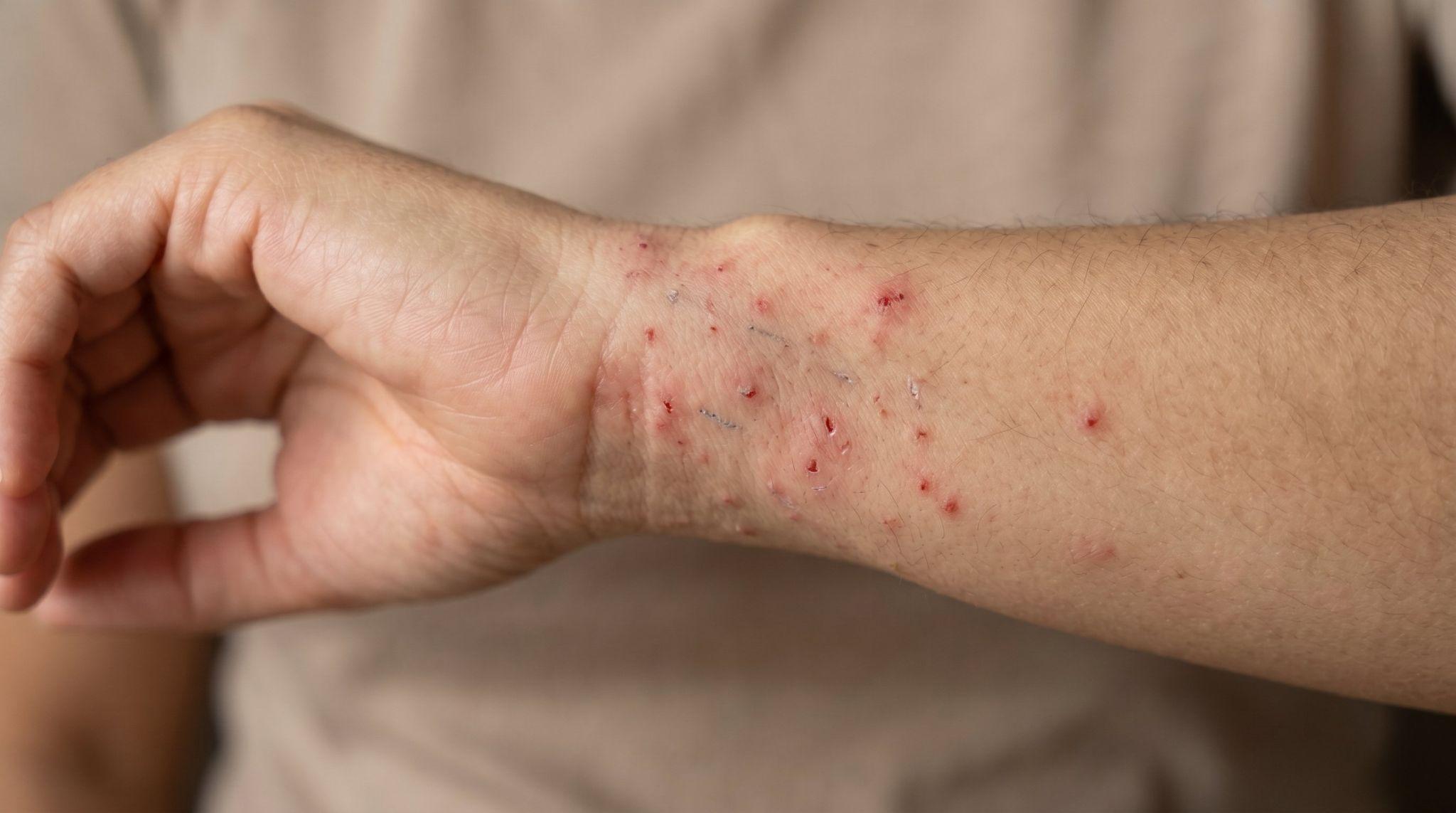
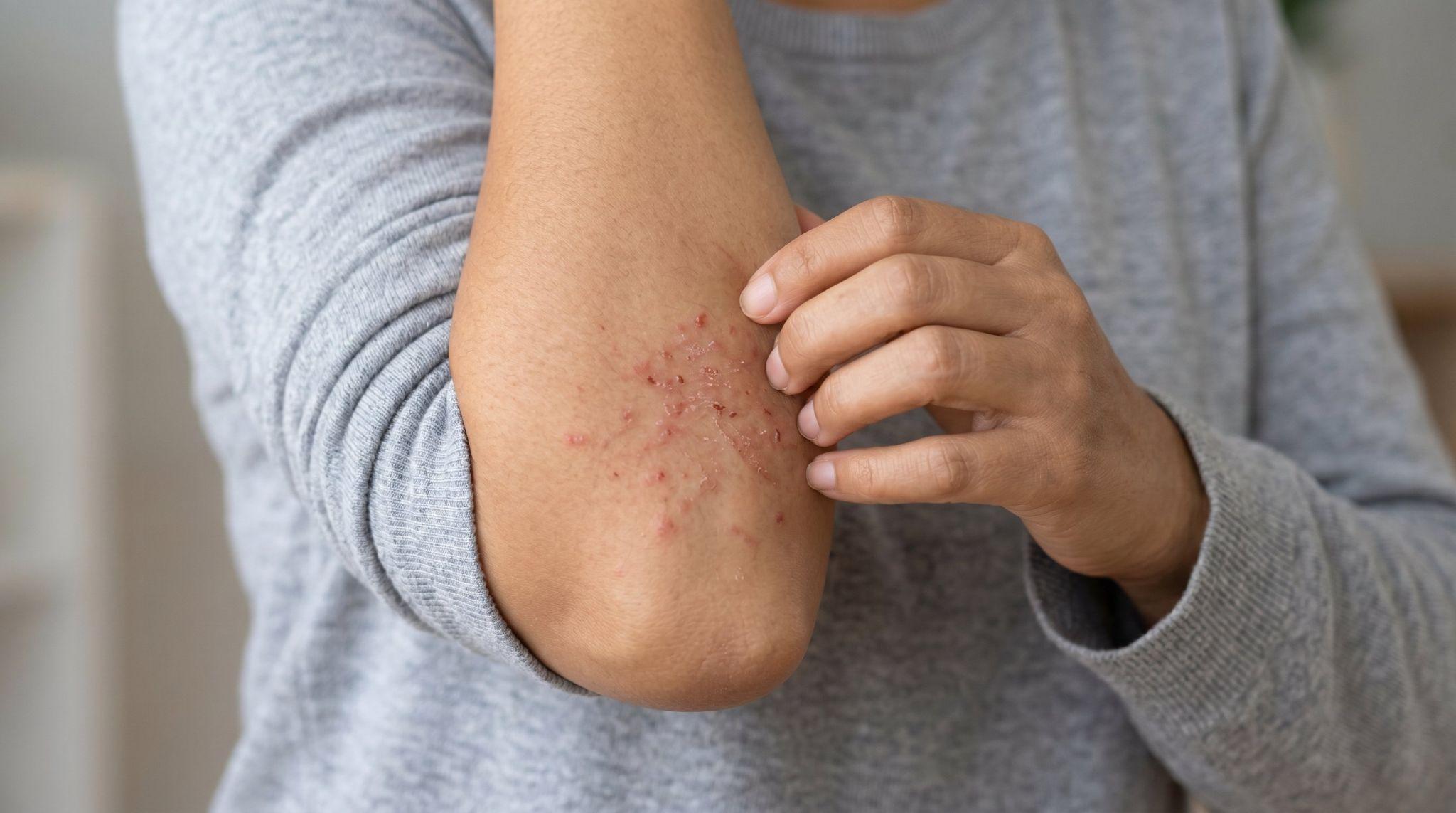
The hallmark of scabies is intense itching that gets dramatically worse at night. It’s caused by Sarcoptes scabiei, a microscopic mite that burrows under your skin to lay eggs, setting off an immune reaction that makes you want to claw at your skin. According to the CDC, scabies affects an estimated 200 million people worldwide at any given time — and it can affect anyone, regardless of age or hygiene. Recognizing these signs early is the first step toward getting effective scabies treatment in the RGV.
Watch for these telltale signs:
- A pimple-like rash, tiny blisters, or thin gray burrow lines
- Itching that’s worst overnight or after a hot shower
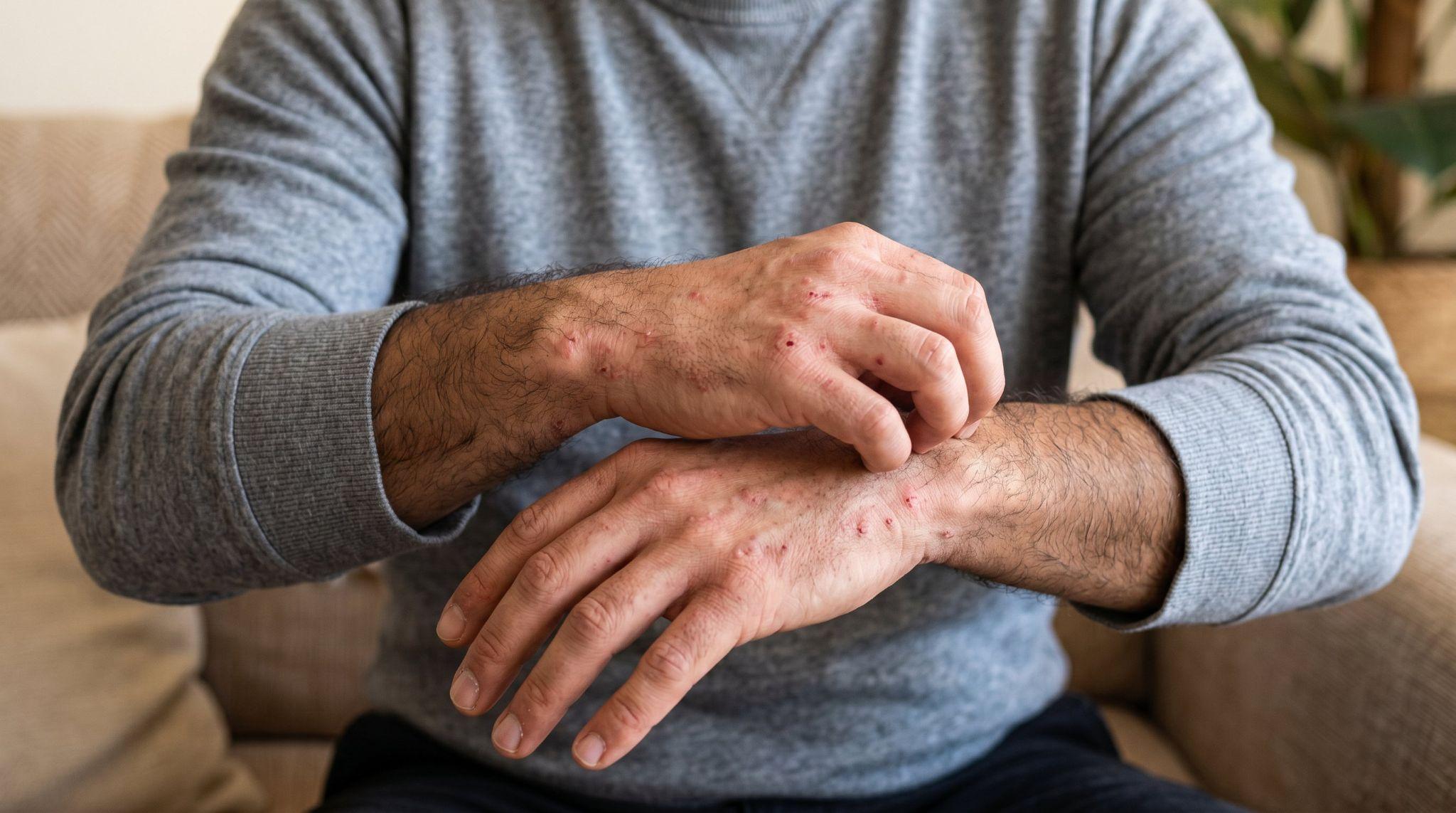
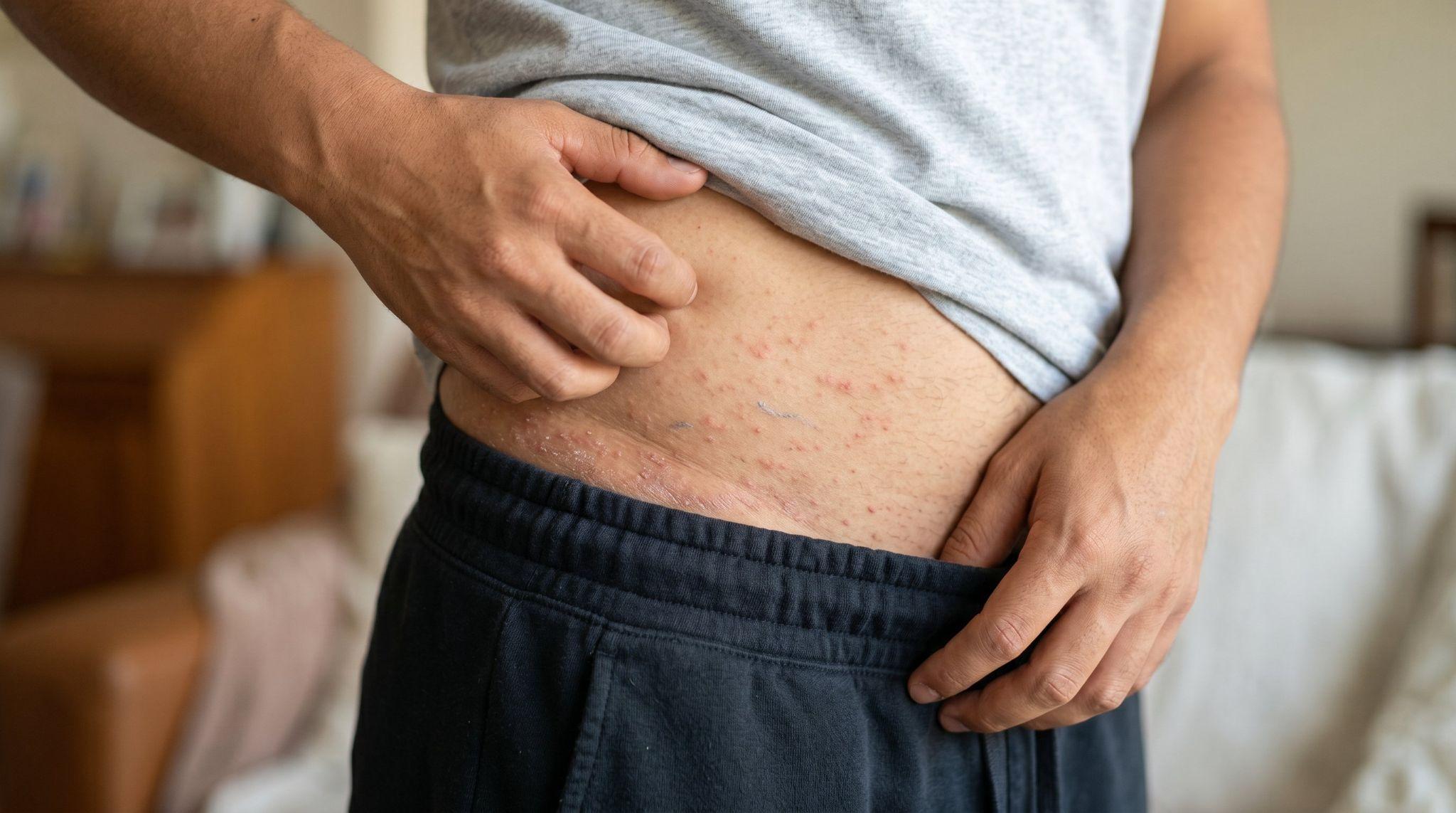
- Hotspots between the fingers, on the wrists, around the waistline, elbows, and in skin folds
- Symptoms not improving after treating it with over the counter hydrocortisone creams, or over the counter topical antibiotic ointments
Here’s what trips people up: symptoms may not show up for 2 to 6 weeks after exposure. That delay means you can pass scabies to others before you ever realize you have it.
And to be clear, scabies is not a sign of poor hygiene. It affects clean, healthy families across the Valley. If the itching won’t quit and over-the-counter creams aren’t helping, it’s time to see a doctor.
How Scabies Spreads in the Rio Grande Valley
Scabies spreads through prolonged, direct skin-to-skin contact — not a quick handshake, but the kind of close contact that happens every day inside a busy household. That’s exactly why it travels so easily here.
In the Rio Grande Valley, multigenerational households are the norm. Grandparents, parents, kids, and cousins often share one home, and sometimes one bed. Add our warm South Texas climate and tight-knit community living, and you have conditions where scabies can quietly jump from one family member to the next before anyone connects the dots.
It can also spread through shared bedding, towels, and clothing, though skin-to-skin contact is the main route. Schools, daycares, and nursing homes around Weslaco, McAllen, and Harlingen see outbreaks too.
The takeaway: scabies isn’t seasonal here. We treat it all year. So if one person in the house is itching, assume others may be affected even if they feel fine.
Where to Get Scabies Treatment in the RGV
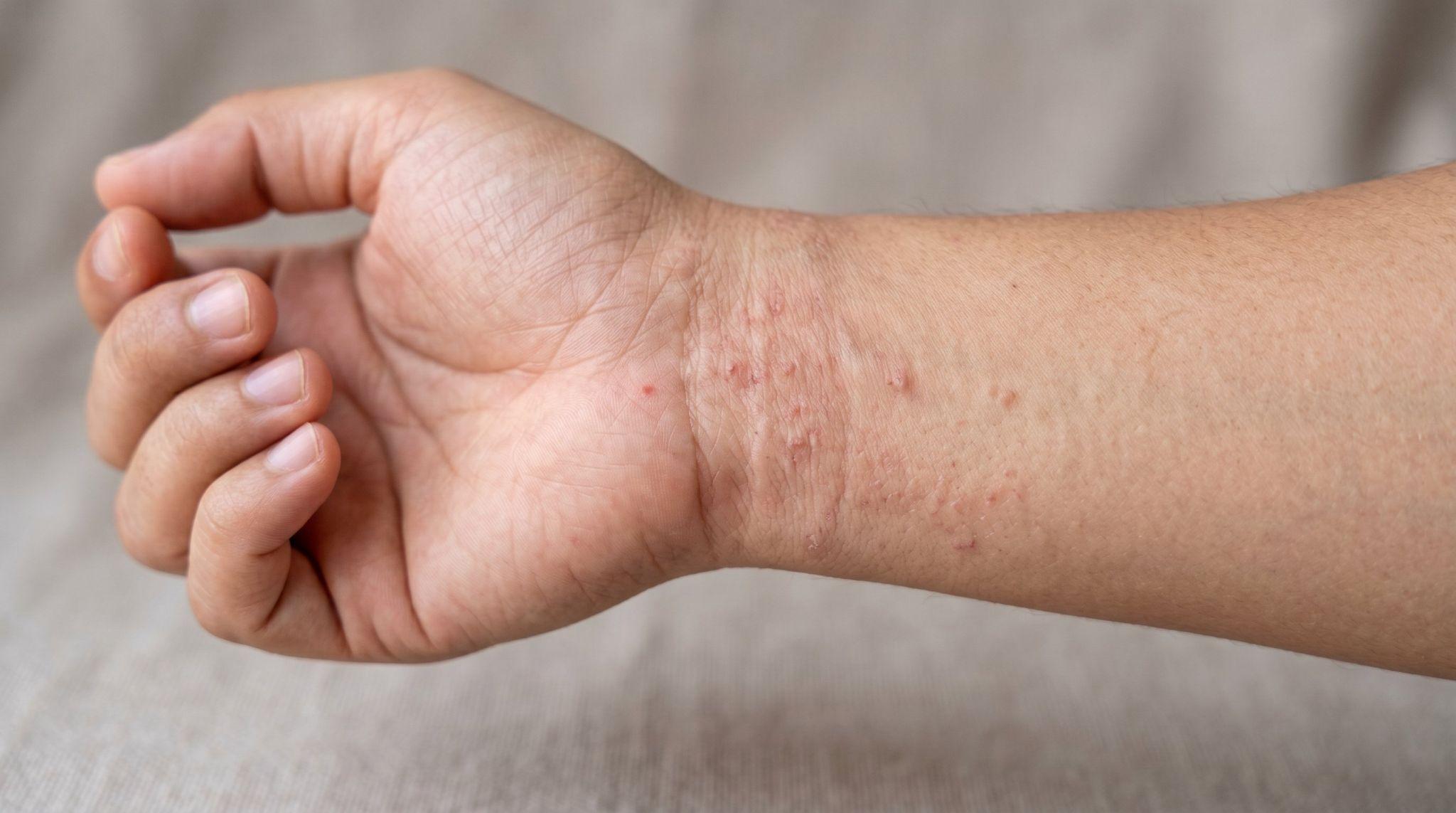
You need a doctor to treat scabies — there’s no effective over-the-counter cure. A licensed physician can confirm the diagnosis, rule out look-alike rashes like eczema or allergic reactions, and prescribe the medication that actually works.
At RGV Direct Care, we diagnose and treat scabies for patients across Weslaco, McAllen, Edinburg, Mission, Harlingen, Pharr, and the surrounding Hidalgo and Cameron County communities. Because we’re an integrative family clinic, we don’t just hand you a cream and send you out the door.
We look at the whole picture: skin barrier recovery, immune support, nutrition that aids healing, and the stress an outbreak puts on a household. We can also see your whole family in a coordinated visit, which saves you the back-and-forth of multiple urgent care trips.
Want to know more about our approach? Learn about us or contact us to book. Searching “scabies doctor near me” in the Valley? We’re here to help.
Prescription and Over-the-Counter Treatment Options
The first-line treatment for scabies is permethrin 5% cream, a prescription scabicide that kills the mites and their eggs. No drugstore product can replace it — anti-itch creams and antihistamines may ease the symptoms, but they won’t clear the infestation.
For more severe cases, widespread infestations, crusted scabies, or patients who are immunocompromised, we may prescribe oral ivermectin. In certain clinical situations — such as intolerance to topical treatment — it may also be considered at your provider’s discretion.
Why not wait it out? Because untreated scabies only gets worse. The mite population grows, the itching intensifies, and scratching can lead to bacterial skin infections — a well-documented complication.
The sooner you start prescription treatment, the faster you get relief and the less likely you are to spread it.
How to Properly Apply Scabies Medication
Getting the application right matters as much as the medication itself. Follow these steps:
- Apply from the neck down. Cover your entire body — every inch of skin, including between fingers and toes, under nails, and in skin folds. For young children and the elderly, include the scalp and face (avoiding eyes and mouth).
- Leave it on overnight. Most permethrin treatments stay on for 8 to 14 hours.
- Wash it off thoroughly in the morning.
- Repeat in about a week if your provider recommends a second round to catch newly hatched mites.
Keep in mind: itching can linger for 2 to 4 weeks even after successful treatment. That doesn’t mean it failed — your skin is still calming down. If new burrows appear, though, call us.
Treating Your Home and Preventing Reinfestation
Treating your body isn’t enough — you have to treat your home too, or the mites can find their way right back to you. Decontaminating your environment is a non-negotiable part of beating scabies.
Here’s what to do on the same day you start treatment:
- Wash all bedding, towels, and clothing used in the past three days in hot water and dry on high heat. Heat kills the mites.
- Bag non-washable items (pillows, stuffed animals, shoes) in sealed plastic for at least 72 hours. Without a human host, the mites die.
- Vacuum carpets, couches, and mattresses, then throw out the vacuum bag.
Good news: scabies mites can’t survive long away from skin — usually just two to three days. You don’t need to fumigate the house or go overboard with sprays.
At RGV Direct Care, we walk families through this checklist so nothing gets missed. Treating the person and the home together is the only way to stop the cycle for good.
Protecting Your Family and Stopping the Spread with Scabies Treatment in the RGV
Everyone in the household needs treatment at the same time, even people who aren’t itching yet. This is the single most important rule for stopping scabies — and it’s where most reinfestations start.
Remember that 2-to-6-week delay before symptoms appear? Family members and close contacts can already be carrying the mites without a single symptom. If you treat only the person who’s scratching, the untreated ones will simply pass it back.
That’s why we recommend simultaneous treatment for all household members and close contacts. At RGV Direct Care, we can see your whole family in one coordinated visit and assess anyone who may have been exposed — children, elderly relatives, and immunocompromised family members included.
This family-centered approach sits at the heart of integrative medicine. We treat the health of the household, not just one patient. For Valley families living under one roof, that’s exactly the kind of care that ends an outbreak instead of dragging it out for months.
Don’t Wait — Get Relief Today: Scabies Treatment in the Rio Grande Valley
Scabies won’t disappear on its own, and the longer you wait, the further it spreads. The path to relief is straightforward: get an accurate diagnosis, use prescription treatment correctly, decontaminate your home, and treat the whole family at once.
Think you or a loved one may have scabies? At RGV Direct Care, we’re ready to help with compassionate, integrative care rooted in South Texas. Book online or contact us today — serving Weslaco and the entire Rio Grande Valley.
What is scabies and what are the main symptoms?
Scabies is a skin infestation caused by mites that burrow under your skin. Key symptoms include intense itching (especially at night), pimple-like rashes, thin gray burrow lines, and hotspots between fingers, wrists, elbows, and skin folds. Symptoms may take 2–6 weeks to appear after exposure.
How does scabies spread in the Rio Grande Valley?
Scabies spreads primarily through prolonged skin-to-skin contact, which is common in multigenerational households throughout the RGV. It can also spread via shared bedding, towels, and clothing. Our warm climate and tight-knit community living create ideal conditions for transmission year-round.
What is the most effective prescription treatment for scabies?
Permethrin 5% cream is the first-line prescription treatment for scabies. It kills mites and their eggs when applied from the neck down and left on overnight. For severe cases, crusted scabies, or immunocompromised patients, oral ivermectin may be prescribed. No over-the-counter products can effectively cure scabies.
Why is it important to treat the entire household at the same time?
Everyone in the household needs treatment simultaneously because family members can carry scabies mites for 2–6 weeks before symptoms appear. If only one person is treated, untreated family members will simply pass the infestation back, prolonging the outbreak for months.
What steps should I take to prevent scabies reinfestation after treatment?
On the same day you start treatment, wash all bedding, towels, and clothing in hot water on high heat. Bag non-washable items in sealed plastic for 72+ hours. Vacuum carpets, couches, and mattresses. Scabies mites die without a human host within 2–3 days, so you don’t need fumigation.
Does itching stop immediately after scabies treatment?
No. Even after successful prescription treatment, itching can linger for 2–4 weeks as your skin calms down. This doesn’t mean treatment failed. However, if new burrows appear, contact your doctor. At RGV Direct Care, we provide ongoing support through this recovery period with an integrative approach to skin barrier recovery and immune support.